
How to Identify the 1931 Dropped 1 Indian Obverse Penny
The 1931 dropped or misaligned 1 penny with the Indian obverse is one of the great Australian penny rarities. In my opinion, it is far scarcer than the 1930 penny, even though its value does not always reflect just how rare it is.
This guide explains the two key features collectors need to identify: the dropped/misaligned 1 reverse and the Indian obverse.
Two Things to Confirm

The Key Rarity
The 1931 dropped/misaligned 1 Indian obverse penny is the variety collectors should pay very close attention to.
While the 1930 penny gets most of the attention, this 1931 variety is considerably scarcer and much easier to overlook if you do not know exactly what to check.

First Check: The Dropped/Misaligned 1
The first thing to check is the final 1 in the date on the reverse.
On the dropped or misaligned 1 variety, the final 1 does not sit in the normal position. It appears noticeably out of alignment compared with the rest of the date.
This is the first filter. If the reverse does not show the dropped/misaligned 1, then it is not the rare Indian obverse dropped 1 variety.

Second Check: The Indian Obverse
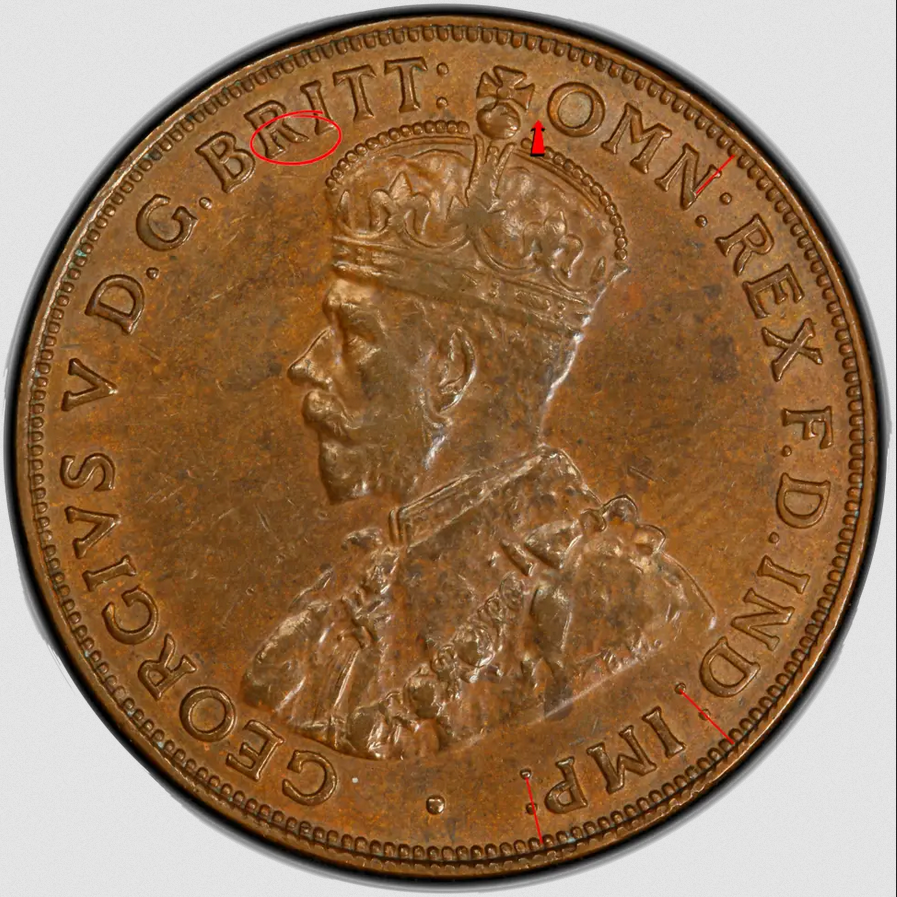
Once the dropped/misaligned 1 has been confirmed, the next step is to identify the obverse.
The rare variety uses the Indian obverse, not the London obverse. If you already understand the KGV penny master dies, this part becomes much easier.
The Four 1931 Penny Varieties
There are four main 1931 penny combinations collectors should understand.
1. Dropped/Misaligned 1 – Indian Obverse
This is the key rarity and the variety covered in this guide.
2. Dropped/Misaligned 1 – London Obverse

This has the dropped/misaligned 1 reverse but is paired with the London obverse.
3. Standard 1 – Indian Obverse

This has the Indian obverse but does not have the dropped/misaligned 1 reverse.
4. Standard 1 – London Obverse
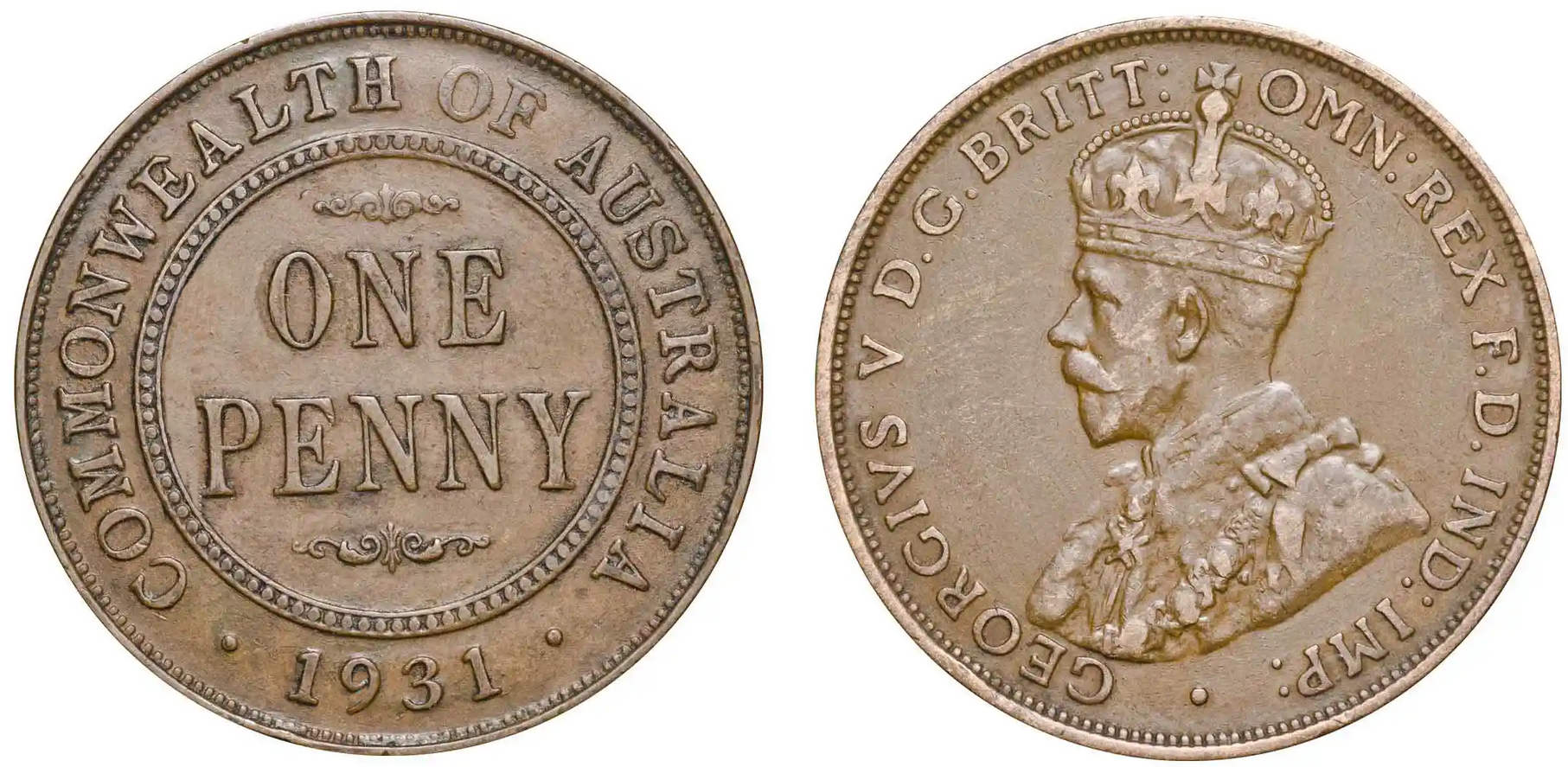
This has the standard 1 reverse and London obverse.

Why the Master Dies Matter
The dropped/misaligned 1 is only half the job. To identify the scarcer variety, the obverse must also be checked.
If you can already tell the difference between the Indian and London obverses, you are well on the way to identifying this coin correctly.
Simple Identification Rule
To identify the 1931 dropped/misaligned 1 Indian obverse penny, remember this simple rule:
If either part is missing, it belongs to one of the other 1931 penny varieties.
Quick 1931 Dropped 1 Indian Obverse Checklist
- Does the reverse show a dropped or misaligned final 1?
- Does the obverse match the Indian obverse?
- Have you ruled out the London obverse dropped 1 variety?
- Have you compared it against the standard 1 varieties?
- Does the coin match both required features together?
Final Thoughts
The 1931 dropped/misaligned 1 Indian obverse penny is one of the most important King George V penny varieties to understand. It is much rarer than many collectors realise and can easily be missed if only the date is checked.
The safest way to identify it is simple: confirm the dropped/misaligned 1 on the reverse, then confirm the Indian obverse. Once both features are present, you are looking at one of the scarcest Australian penny varieties.