
Understanding King George V Penny Master Dies
During the King George V penny period, Australian pennies were struck using two main obverse master dies and three main reverse master dies.
This guide explains those dies in simple terms so beginner collectors can understand how to identify the main obverse and reverse types used across the series.

KGV Penny Master Dies
Master dies are one of the most important areas of King George V penny collecting. They help collectors identify genuine varieties, understand die pairings, and detect coins that do not match the correct type for a particular year.
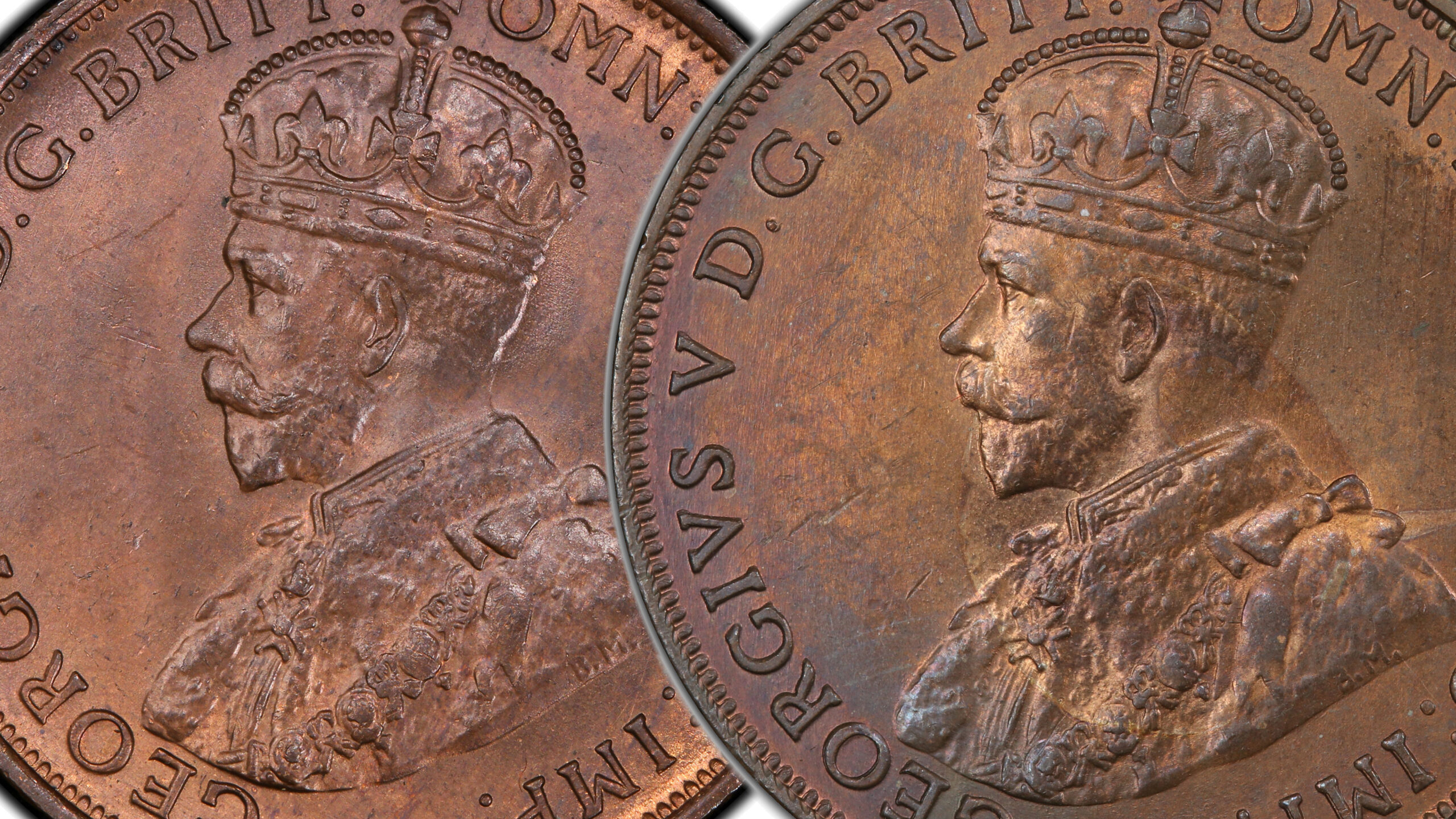
Obverse Dies
The obverse is the portrait side of the coin. In the KGV penny series, there are two main obverse master dies known as O-1 and O-2.

O-1: English / London Obverse
The O-1 obverse is the English, or London, obverse. It has 177 rim denticles.

O-2: Indian / Calcutta Obverse
The O-2 obverse is the Indian, or Calcutta, obverse. It has 178 rim denticles.

Obverse Distinguishing Features
These comparison images show key features collectors can use to help distinguish between the London and Calcutta obverse dies.

Counting rim denticles is useful, but many collectors also use portrait details and other small design differences to confirm the obverse type.

Learning these details makes attribution much easier, especially when dealing with worn coins or key varieties.
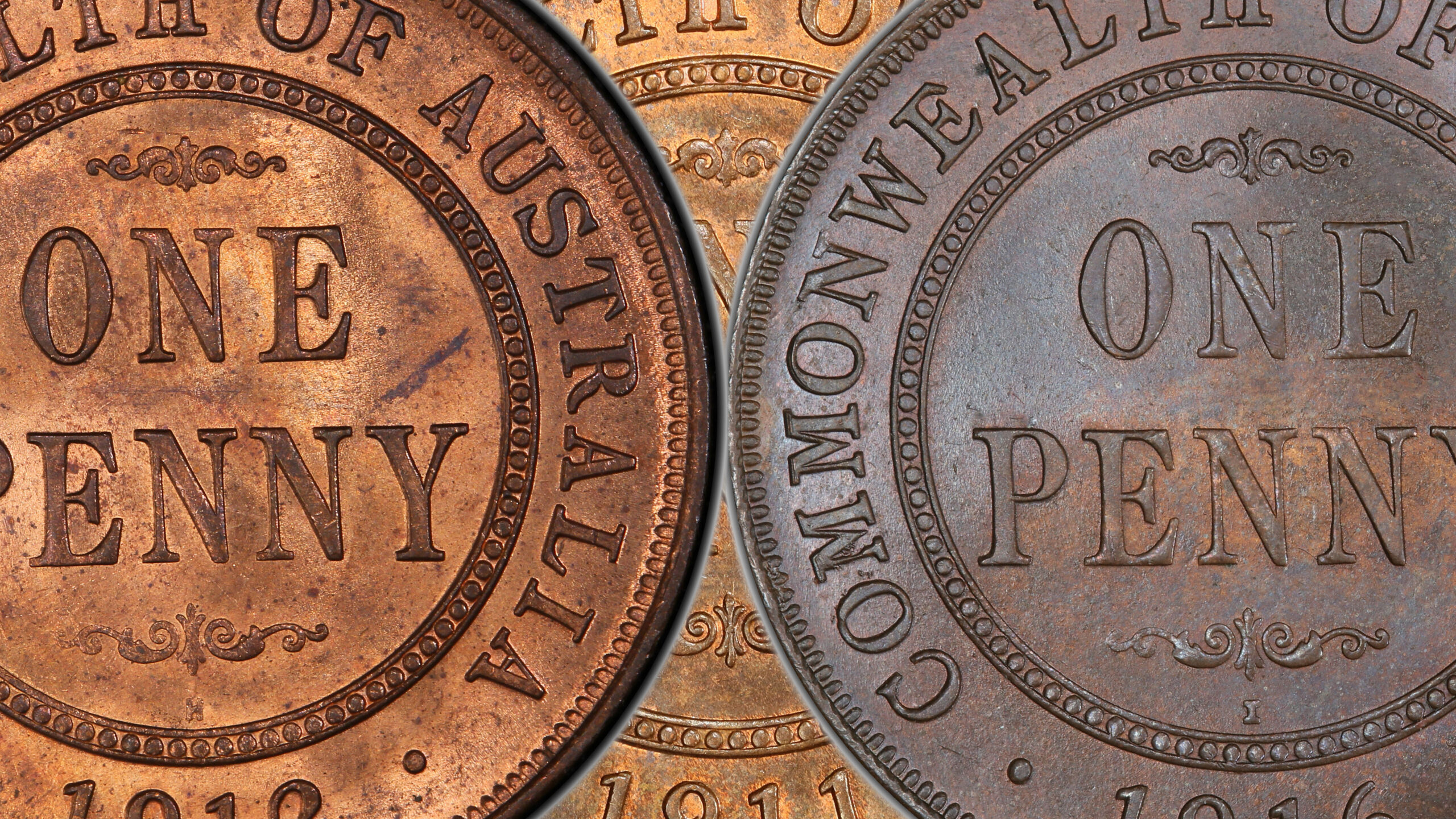
Reverse Dies
The reverse is the kangaroo side of the penny. In the KGV penny series, there are three main reverse master dies known as R-A, R-B and R-C.

R-A: London Reverse
The R-A reverse is the London reverse. It has 174 rim denticles and was used between 1911 and 1931 at the London, Melbourne and Sydney mints.

R-B: Birmingham Reverse
The R-B reverse is the Birmingham reverse. It has 177 rim denticles and was used between 1912 and 1936 at the Heaton, London, Sydney, Melbourne and Perth mints.
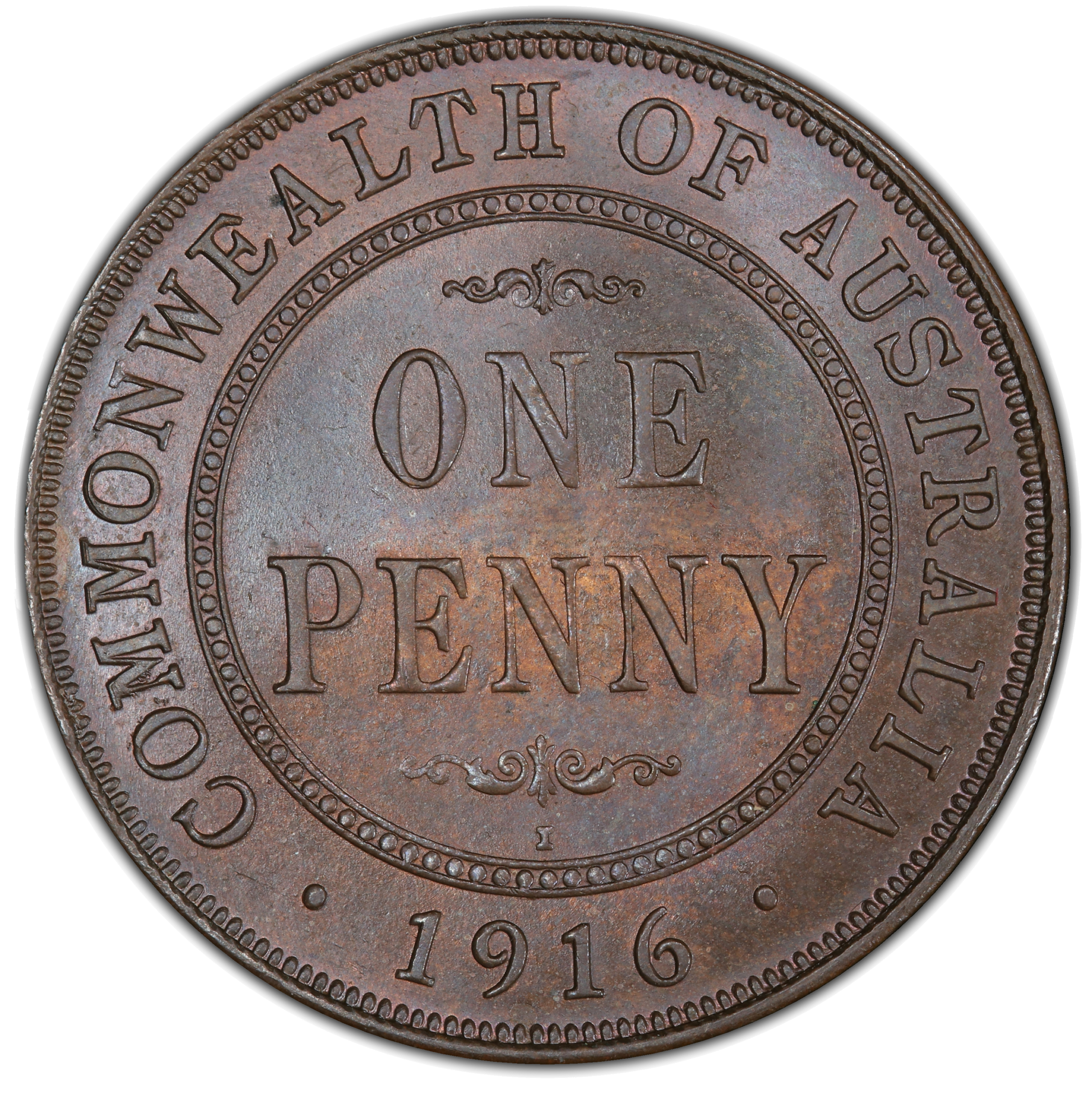
R-C: Calcutta Reverse
The R-C reverse is the Calcutta reverse. It has 178 rim denticles and was used between 1916 and 1920 at the Calcutta, Sydney and Melbourne mints.

Reverse Distinguishing Features
These comparison images highlight the main reverse die differences collectors should look for when identifying KGV penny die pairings.

Reverse die identification is especially useful when checking whether a coin matches the correct die pairing for its date.

These features are also useful when checking rare dates and suspected altered coins.
KGV Penny Die Pairings by Year
Once you understand the obverse and reverse master dies, the table below can be used as a quick reference for identifying the die pairings used on King George V Australian pennies.
| Year | Obverse | Reverse | Mint | Variety | Rarity |
|---|---|---|---|---|---|
| 1911 | O-1 | R-A | Heaton | Common | |
| 1912 | O-1 | R-B | Heaton | Common | |
| 1913 | O-1 | R-B | Heaton | Common | |
| 1914 | O-1 | R-B | Heaton | Common | |
| 1915 | O-1 | R-B | Heaton | Common | |
| 1915H | O-1 | R-B | Heaton | H | Common |
| 1916 | O-2 | R-C | Calcutta | Common | |
| 1917 | O-2 | R-C | Calcutta | Common | |
| 1918 | O-2 | R-C | Calcutta | Common | |
| 1919 | O-1 | R-B | Melbourne | No dot | Common |
| 1919 | O-1 | R-B | Melbourne | Dot below bottom scroll | Common |
| 1919 | O-1 | R-B | Melbourne | Double dot | Rare |
| 1920 | O-1 | R-C | Melbourne | Rare | |
| 1920 | O-1 | R-C | Melbourne | Dot below bottom scroll | Rare |
| 1920 | O-1 | R-C | Sydney | Dot above bottom scroll | Ext. Rare |
| 1920 | O-2 | R-C | Melb & Syd | Common | |
| 1920 | O-2 | R-C | Melbourne | Dot below bottom scroll | Common |
| 1920 | O-2 | R-C | Melbourne | Double dot | Rare |
| 1920 | O-2 | R-C | Sydney | Dot above bottom scroll | Scarce |
| 1920 | O-2 | R-C | Melbourne | Dot above top scroll | Rare |
| 1921 | O-1 | R-B | Melbourne | Rare | |
| 1921 | O-2 | R-B | Melb & Perth | Common | |
| 1922 | O-1 | R-B | Melbourne | Common | |
| 1922 | O-2 | R-B | Perth | Scarce | |
| 1923 | O-1 | R-A | Melbourne | Common | |
| 1924 | O-1 | R-A | Melb & Syd | Common | |
| 1924 | O-1 | R-A | Melb & Syd | Filled 4 | Common |
| 1924 | O-2 | R-A | Sydney | Rare | |
| 1925 | O-1 | R-A | Melbourne | Scarce | |
| 1926 | O-1 | R-A | Melbourne | Common | |
| 1927 | O-1 | R-A | Melbourne | Common | |
| 1927 | O-2 | R-A | Melbourne | Rare | |
| 1928 | O-1 | R-A | Melbourne | Common | |
| 1929 | O-1 | R-A | Melbourne | Common | |
| 1929 | O-2 | R-A | Melbourne | Common | |
| 1930 | O-1 | R-A | Melbourne | Ext. Rare | |
| 1930 | O-2 | R-A | Melbourne | 2-3 examples known | |
| 1931 | O-1 | R-A | Melbourne | 1 misaligned | Common |
| 1931 | O-1 | R-B | Melbourne | Common | |
| 1931 | O-2 | R-A | Melbourne | 1 misaligned | Ext. Rare |
| 1931 | O-2 | R-B | Melbourne | Rare | |
| 1932 | O-1 | R-B | Melbourne | Common | |
| 1933 | O-1 | R-B | Melbourne | Common | |
| 1933/32 | O-1 | R-B | Melbourne | Overdate | Scarce |
| 1934 | O-1 | R-B | Melbourne | Common | |
| 1935 | O-1 | R-B | Melbourne | Common | |
| 1936 | O-1 | R-B | Melbourne | Common |
Why These Die Pairings Matter
Understanding these obverse and reverse dies gives beginner collectors a much better foundation for identifying which die pairings were used in specific years.
It also helps collectors distinguish between the London and Indian obverse dies, which is essential knowledge for serious King George V penny collecting.
This information is also one of the best tools for detecting altered or counterfeit coins, especially key-date pieces such as the 1930 penny. A separate article on identifying fake 1930 pennies will follow.
Legend
- O-1 = Obverse Type 1 die
- O-2 = Obverse Type 2 die
- R-A = Reverse Type 1 die
- R-B = Reverse Type 2 die
- R-C = Reverse Type 3 die