
How to Identify a Genuine 1930 Penny
The 1930 Australian penny is Australia's most famous coin and one of the most frequently copied. Every collector should understand the basic die features before accepting a 1930 penny as genuine.
This guide explains the key obverse, reverse and date-area checks that can help identify whether a 1930 penny is likely to be genuine or fake.
Three Steps to Authenticate a 1930 Penny

Start With the Master Dies
Before trying to authenticate a 1930 penny, it is important to understand the King George V penny master dies. The obverse and reverse die pairing is one of the strongest first checks a collector can make.
If you have not already read the master die guide, it is worth doing that first.
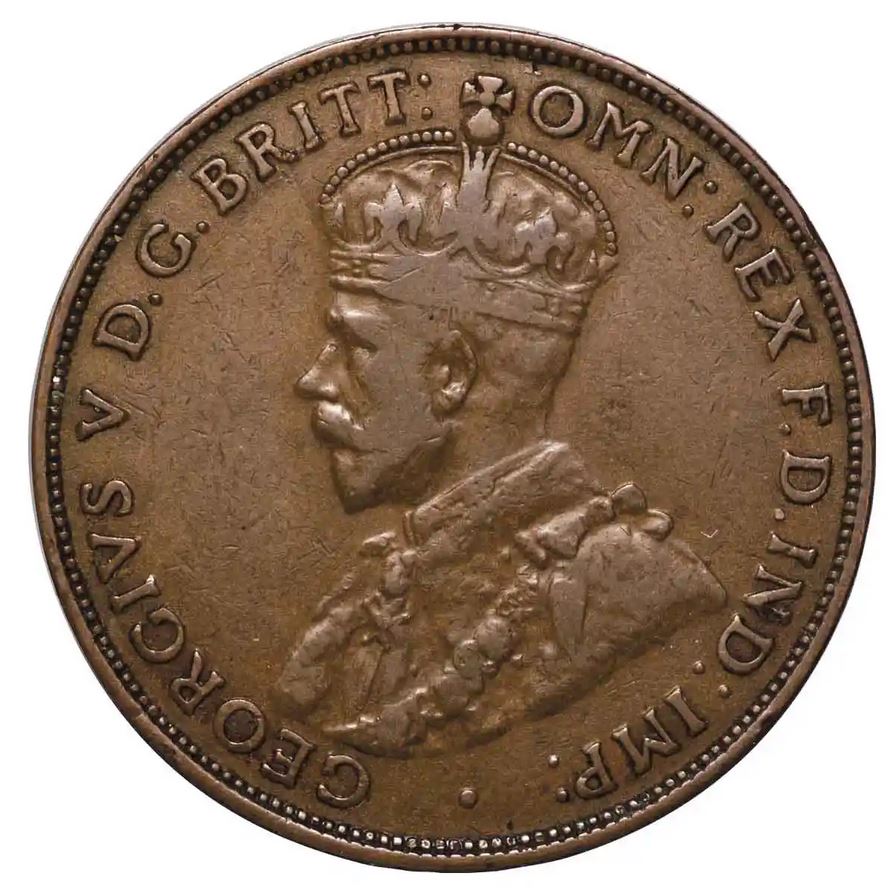
The Correct 1930 Penny Obverse
Genuine circulation-strike 1930 pennies should show the O-2 Indian / Calcutta obverse. This obverse has 178 rim denticles and contains several features that separate it from the O-1 London obverse.

The Correct 1930 Penny Reverse
Genuine 1930 pennies should be paired with the R-A London reverse.
Once you understand this pairing, many fake or altered 1930 pennies can be ruled out quickly.
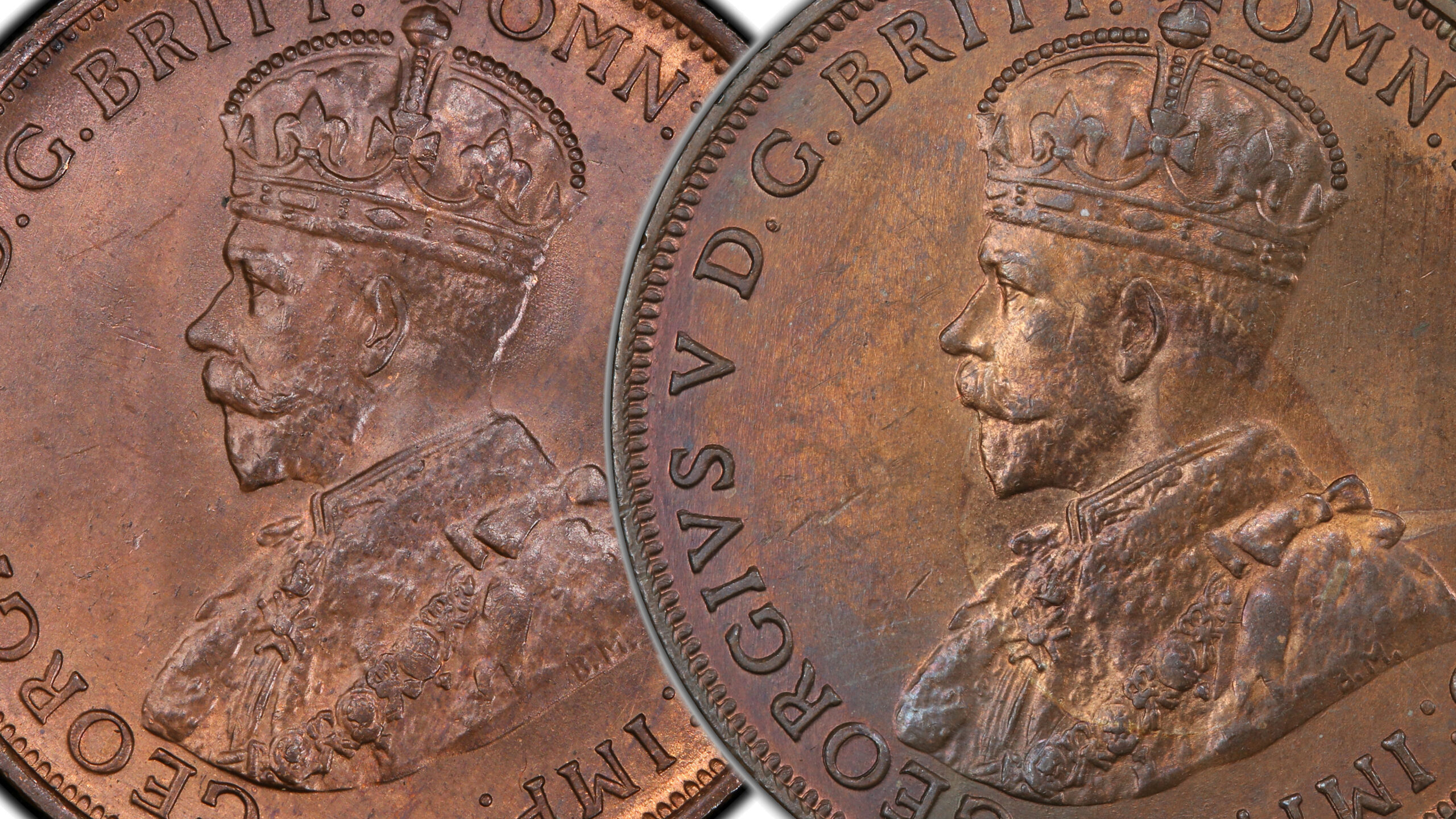
What About the English Obverse?
Three genuine 1930 pennies with the English obverse are known to exist, and all three are accounted for. This means collectors do not need to worry about an unrecorded English-obverse example appearing in the marketplace.
For practical authentication, the 1930 pennies collectors need to concentrate on are the O-2 Indian / Calcutta obverse examples, paired with the R-A London reverse.

Obverse Pointers to Look For
The obverse should be checked carefully against known Indian / Calcutta O-2 features.
Look closely at the portrait details, rim denticles and other identifying points shown in the comparison image.

Reverse Pointers to Look For
The reverse should match the R-A London reverse type.
Compare the reverse details carefully, especially when checking a coin that appears worn, cleaned, damaged or suspicious.
A coin may look old and worn, but if the reverse type is wrong, the coin should not be accepted as a genuine 1930 penny.

Check the Date for Tampering
After confirming the correct obverse and reverse types, the date area should be checked carefully for signs of alteration.
Look for tool marks, disturbed metal, uneven surfaces, altered digits, unusual wear patterns or anything that does not match the surrounding area.
Why the Die Pairing Matters
The only other King George V penny known to use the same O-2 and R-A die pairing is the 1931 dropped 1 penny.
Because the 1931 dropped 1 is scarcer than the 1930 penny, it would make little sense for someone to use one as the base coin for a forgery.
This makes the correct die pairing one of the most useful starting points when checking a suspected 1930 penny.
Quick 1930 Penny Authentication Checklist
- Does the obverse match the O-2 Indian / Calcutta obverse?
- Does the reverse match the R-A London reverse?
- Does the date area show signs of alteration or tampering?
- Do the surfaces and wear patterns look natural?
- Does the coin match the expected overall characteristics of a genuine 1930 penny?
Remember
Many counterfeiters spend enormous effort making the date look convincing. Very few spend the same effort reproducing the correct master dies.
Always identify the obverse and reverse before making any judgement about the date.
Final Thoughts
Identifying a genuine 1930 penny is not about relying on one feature. The strongest approach is to first confirm the correct master die pairing, then check the date area, surfaces and overall coin characteristics.
The more familiar you become with the O-2 Indian / Calcutta obverse and R-A London reverse, the easier it becomes to recognise a genuine coin and spot one that simply does not look right.