
KGV Penny Pearls, Bands and Jewels Explained
New collectors often hear terms like pearls, bands, jewels and centre diamond when people discuss King George V pennies. This short guide explains what those terms mean and why they matter.
The same basic features apply across King George V coinage and are especially useful when learning how wear affects grading.
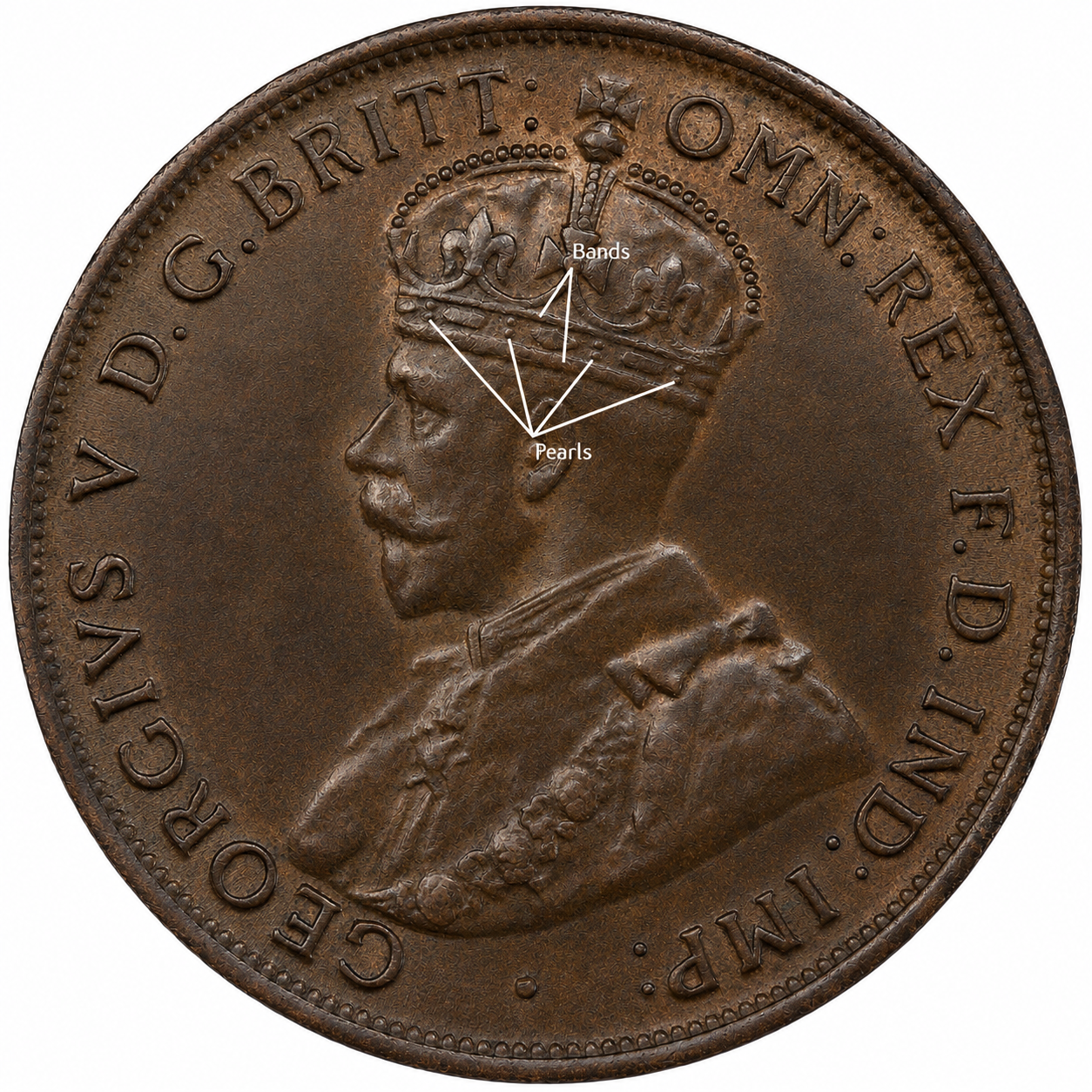
What Are Pearls and Bands?
On King George V pennies, the pearls and bands are raised details on the crown. Because they sit high on the design, they are among the first areas to show wear.
This makes them useful when judging the grade of a coin, especially when comparing circulated examples.

Which Pearls Wear First?
The pearls do not all wear at the same rate. In general, the 7th and 8th pearls are usually the first to disappear.
They are followed by the 5th and 6th, then the 3rd and 4th, with the 1st and 2nd generally lasting the longest.
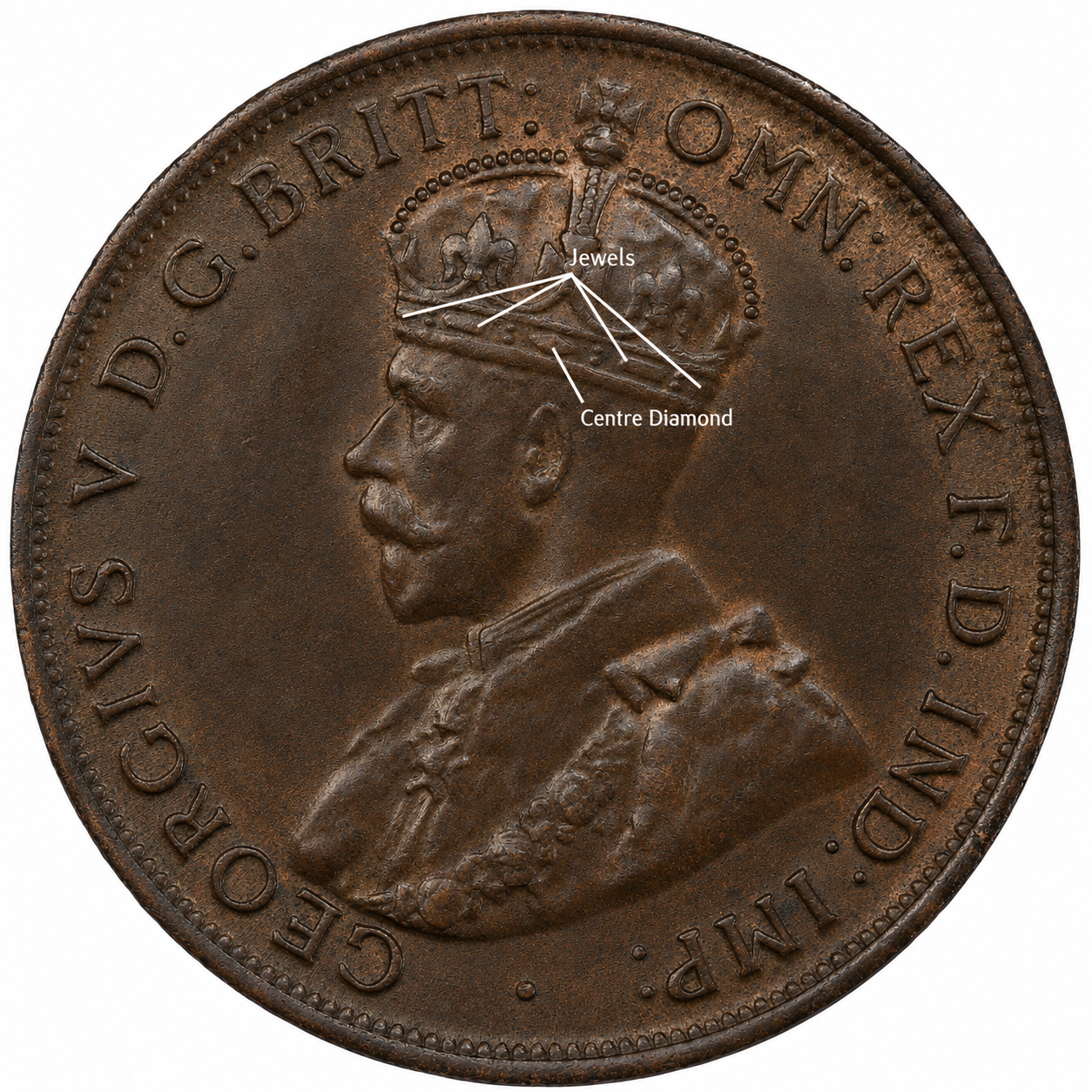
Jewels and Centre Diamond
The jewels and centre diamond are also raised details on the crown. Like the pearls and bands, they begin to soften as the coin circulates.
On higher grade coins, these details are usually sharper and easier to identify. On lower grade coins, they may be weak, flattened or missing altogether.
What to Check When Grading
- Are the crown pearls visible?
- Are the 7th and 8th pearls still clear?
- Are the bands still raised and defined?
- Is the centre diamond visible?
- Are the crown jewels still sharp?
- What condition are the fields in?
- Are there rim knocks, scratches or other damage?
Final Thoughts
Pearls, bands, jewels and the centre diamond are all important visual clues when assessing wear on King George V pennies. They help collectors understand how much detail remains on the coin and are especially useful when comparing examples side by side.
They are not the only factors in grading. The coin's fields, rims, strike quality, surface condition and overall eye appeal must also be considered.