
1988 Australian $10 Polymer Banknotes Explained
First issue, second issue and collector folder notes can look very similar. The easiest way to separate them is to check the prefix, then the 3rd and 4th serial-number numerals, and finally look for the collector date overprint.
The Simple Version
Look at the 3rd and 4th numerals of the serial number. They contain 93, 94 or 96. This was the original issue that was later recalled.
The prefixes begin again at AB10, but the 3rd and 4th serial numerals are not restricted to 93, 94 or 96. They occur as normal/random numerals.
These are non-circulating collector notes supplied in a presentation folder and envelope. They have an AA prefix and a 26 January 1988 date overprint.
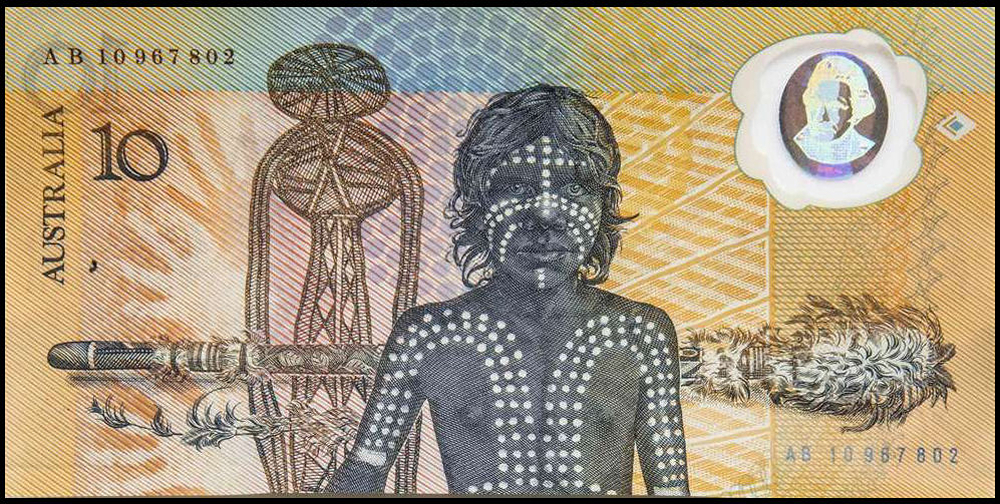
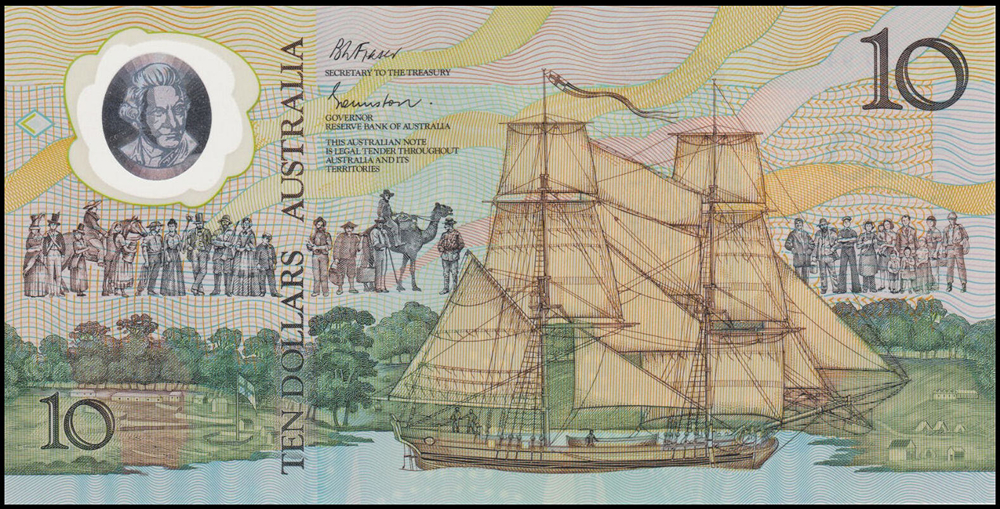
1st Issue - The Recalled Circulating Notes
The first release ran from AB10 through to AB33. Prefix alone does not identify a first issue, because AB10 and later prefixes were used again when replacement notes were issued.
The key identifier is inside the serial number. On first-issue notes, the 3rd and 4th numerals are 93, 94 or 96.
Think of the pattern like this: AB 93xxxxxx, AB 94xxxxxx or AB 96xxxxxx.

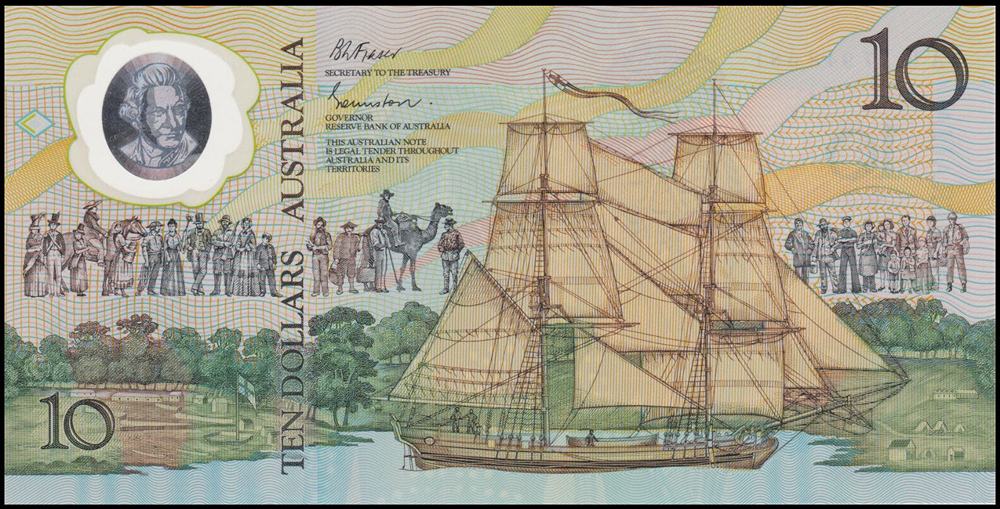
First-Issue Prefix Range
AB10 is the first prefix of the original circulating issue and AB33 is the last prefix.


2nd Issue - Why AB10 Causes Confusion
After the first issue was recalled, the circulating series began again at AB10. This is why two AB10 notes can belong to different issues.
On the second issue, the 3rd and 4th numerals are not confined to the first-issue combinations 93, 94 and 96. They occur as normal/random serial numerals.
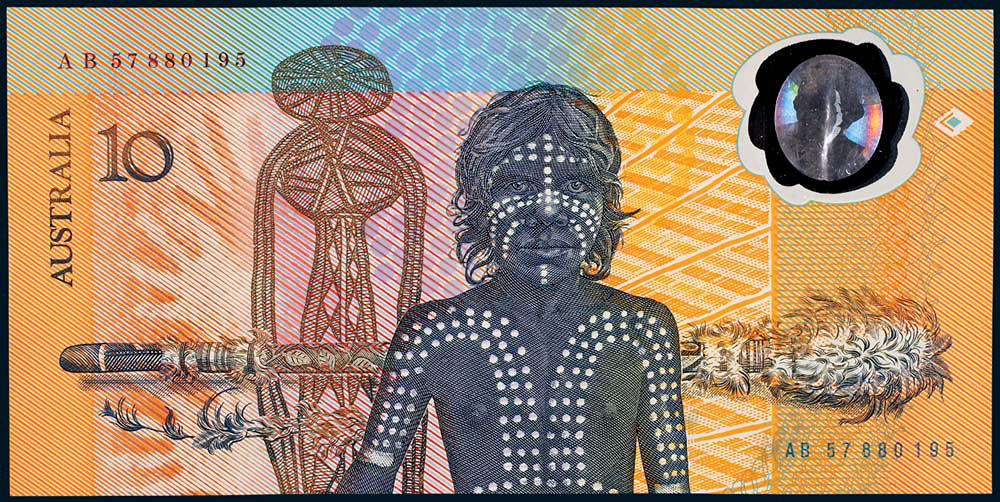

Second-Issue Prefix Range
The second circulating issue runs from AB10 through to AB57.
That means prefixes AB34-AB57 fall outside the first-issue prefix range and are straightforward second-issue notes. The overlap from AB10-AB33 is where collectors need to inspect the serial numerals carefully.
At a Glance: Which 1988 $10 Do I Have?
| Type | Prefix range | 3rd & 4th serial numerals | Circulation status | Extra identifier |
|---|---|---|---|---|
| 1st Issue | AB10-AB33 | 93, 94 or 96 | Recalled issue | No collector date overprint |
| 2nd Issue | AB10-AB57 | Normal/random combinations | Circulating | No collector date overprint |
| Folder Issue | AA00-AA23 | Not the first/second issue test | Non-circulating | Dated 26 January 1988; issued in collector folder/envelope |

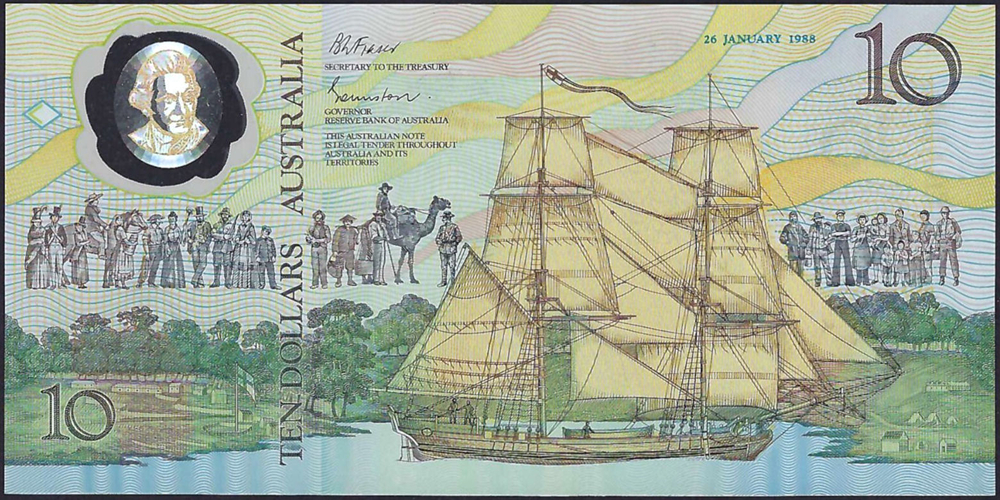
Collector Folder Issues - AA Prefixes
The collector-folder notes are a separate group from the AB circulating issues. Their prefixes begin with AA, starting at AA00 and ending at AA23.
They were produced for collectors rather than normal circulation and were supplied in special presentation packaging.

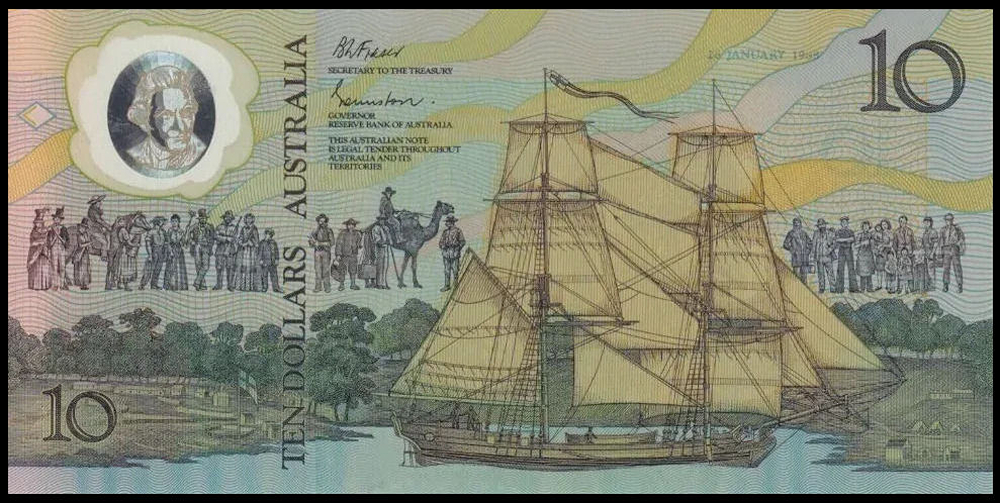
AA00 to AA23
AA00 is the first prefix of the collector-folder series and AA23 is the last.
This makes the AA prefix range a useful first check, but the dated overprint and original presentation packaging are also important features when identifying a complete collector issue.
The Original Collector Packaging
The non-circulating collector note was presented in a special folder with an outer envelope. These pieces are useful when identifying an original complete presentation.
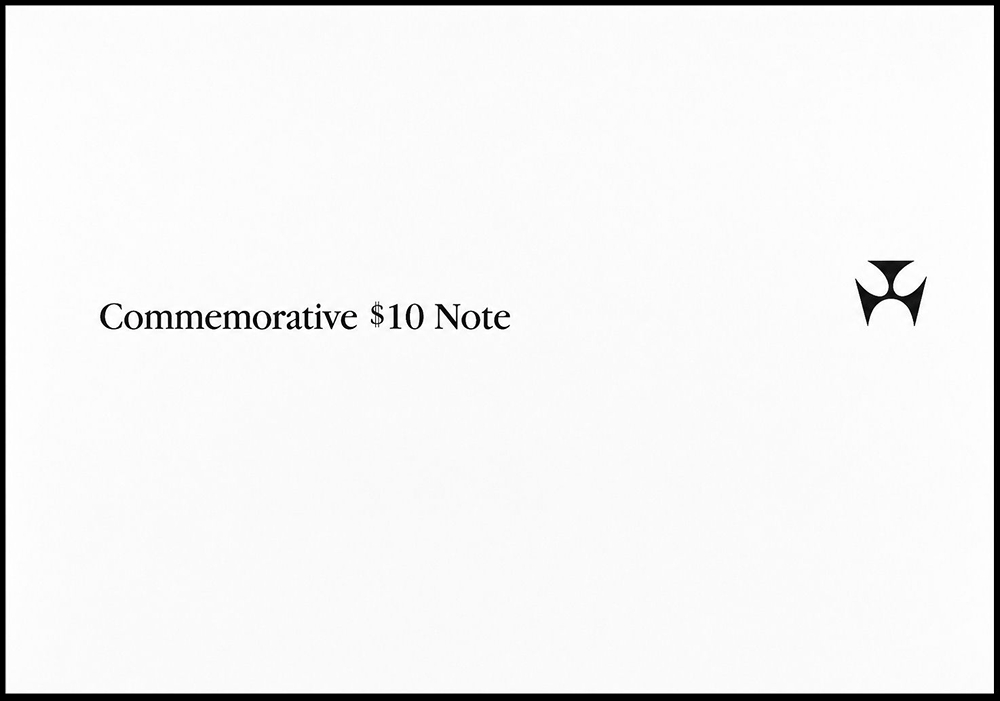
Collector issue outer envelope.
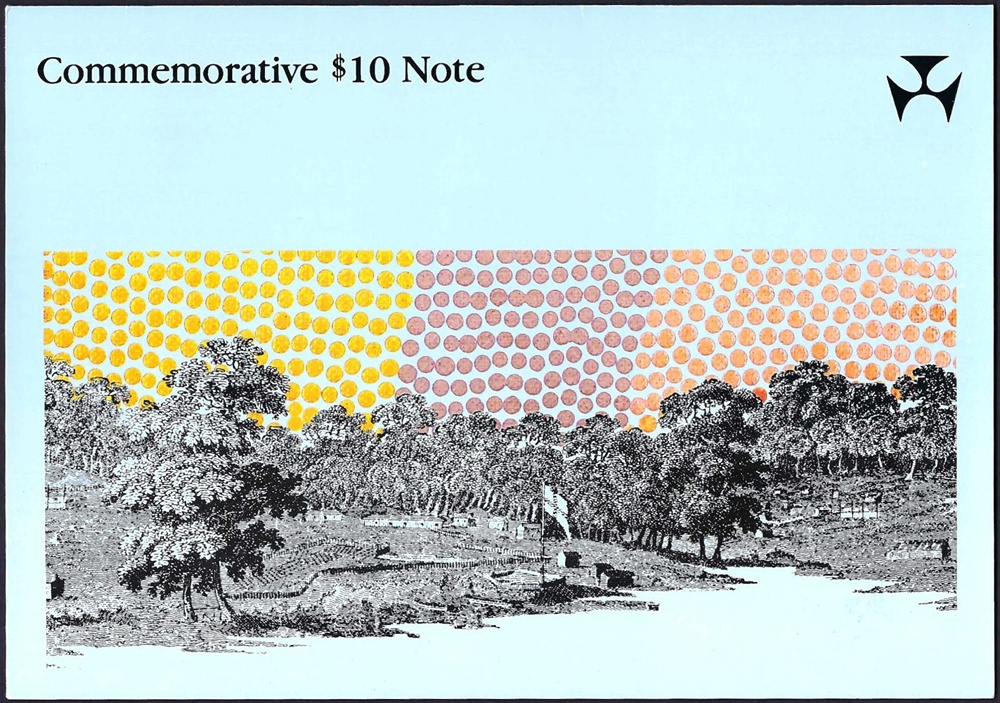
Collector presentation folder.
30-Second Identification Check
The Main Point to Remember
The biggest mistake is trying to identify these notes from the prefix alone. AB10 appears in both circulating issues. For AB10-AB33 notes, always inspect the 3rd and 4th serial-number numerals. The collector-folder notes are easier: they use AA00-AA23 prefixes and carry the 26 January 1988 overprint.