
How to Identify a 1933/32 Penny Overdate
The 1933/32 Australian penny overdate is one of those varieties beginners often hear about but struggle to see clearly at first. Once you know exactly where to look, the overdate becomes much easier to identify.
This guide shows the three main markers to look for on the final digit of the date.
Three Quick Checks

What Is an Overdate?
An overdate occurs when part of an earlier date remains visible underneath a later date. In the case of the 1933/32 penny, traces of the original 2 can still be seen beneath the final 3.
At first glance, it can look like an ordinary 1933 penny. The key is to focus on the last digit and look for the remaining parts of the underlying 2.

The Three Main Markers
When these markers are present together, the overdate becomes much easier to confirm.
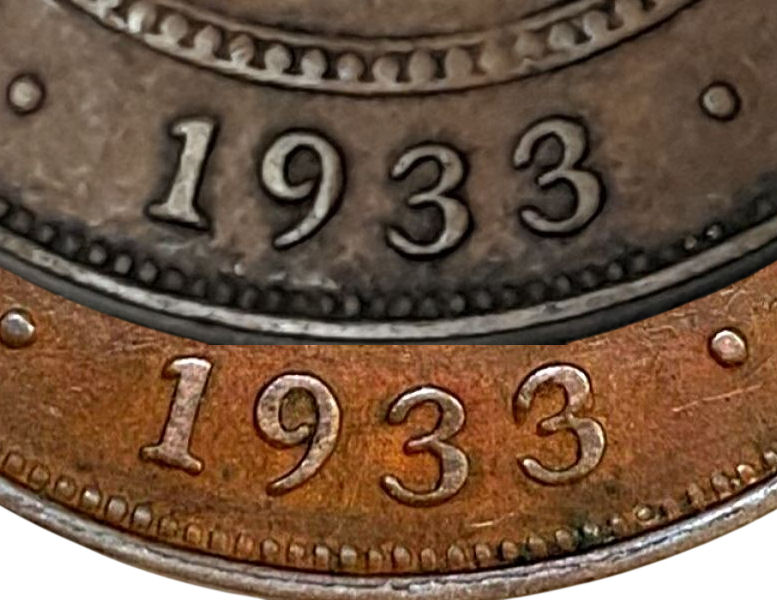
Compare It With a Normal 1933 Penny
The easiest way to train your eye is to compare a normal 1933 penny with a confirmed 1933/32 overdate.
A normal 1933 should not show the small spur or the extra traces of the underlying 2 around the final digit. Once you have seen the difference side by side, the overdate becomes much more obvious.
Quick 1933/32 Overdate Checklist
- Is there a small spur on the downward stroke of the final 3?
- Can you see part of the underlying 2 beneath the final 3?
- Can you see a second trace of the underlying 2 below the final 3?
- Does the final digit look different from a normal 1933 penny?
- Have you compared it with a normal 1933 example?
Final Thoughts
The 1933/32 penny overdate can seem difficult until someone points out the exact features to look for. The small spur on the final 3 is the best place to start.
Once you can recognise that spur, the remaining traces of the underlying 2 become much easier to see. With a good comparison image, this is one of the more beginner-friendly Australian penny varieties to identify.