
How to Identify a 1919 Double Dot Penny
The 1919 double dot penny is a difficult variety to find, and it can be easily missed if you do not know exactly where to look.
This short guide explains the simple identifying points collectors should check when trying to distinguish a genuine 1919 double dot penny.
Three Quick Checks

The Double Dot Variety
The main feature of the 1919 double dot penny is, of course, the presence of two dots. However, collectors should also check the surrounding die markers before making a final call.
Because this is a scarce variety, it is worth taking the time to confirm the details properly.
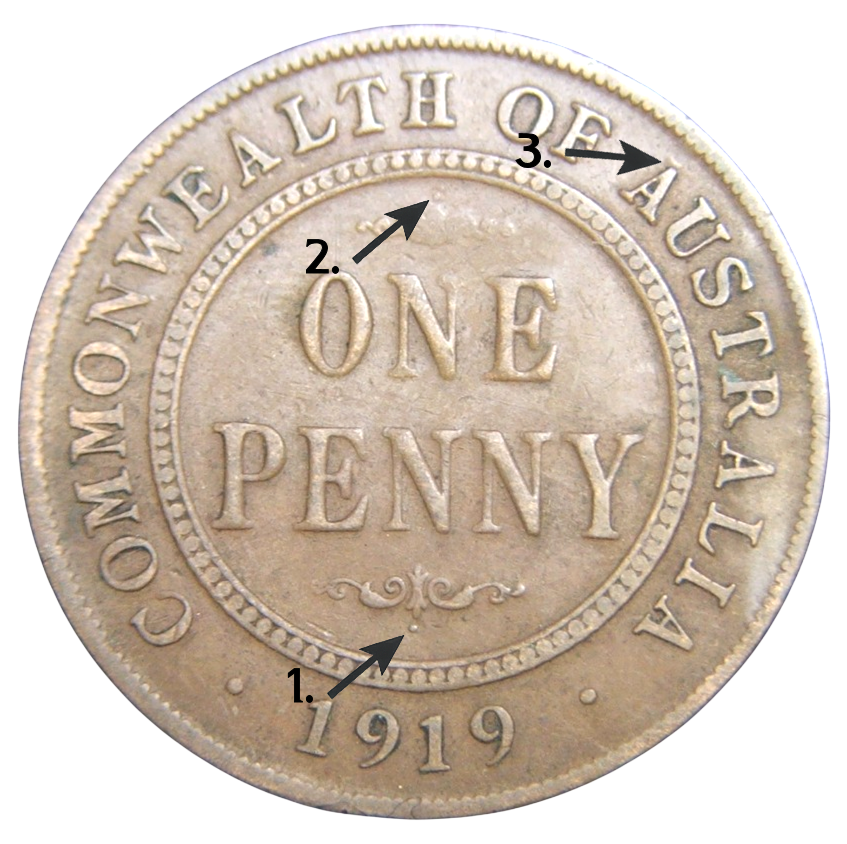
The Extra Markers to Look For
Apart from the double dots, there is a small die fault above the letter A in AUSTRALIA.
The bottom dots are also slightly aligned to the left. Together, these features make the 1919 double dot much easier to distinguish.
Quick 1919 Double Dot Checklist
- Can you see the double dots?
- Is there a small die fault above the letter A in AUSTRALIA?
- Are the lower dots aligned slightly to the left?
- Do the markers match the reference images?
Final Thoughts
The 1919 double dot penny is not complicated once the correct markers are understood. The double dots are the obvious feature, but the die fault above A and the slight left alignment of the lower dots are what help confirm the variety.
For beginners, the easiest approach is to compare the coin directly with the reference images and check each marker one at a time.